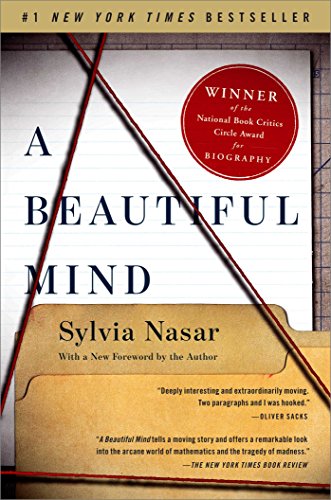
This biography of esteemed mathematician John Nash was both a finalist for the 1998 Pulitzer Prize and the basis for the award-winning film of the same name. Nasar thoroughly explores Nash’s prestigious career, from his beginnings at MIT to his work at the RAND Corporation — as well the internal battle he waged against schizophrenia, a disorder that nearly derailed his life.
2. Alan Turing: The Enigma: The Book That Inspired the Film The Imitation Game - Updated Edition by Andrew Hodges
Hodges’ 1983 biography of Alan Turing sheds light on the inner workings of this brilliant mathematician, cryptologist, and computer pioneer. Indeed, despite the title , a great deal of the “enigmatic” Turing is laid out in this book. It covers his heroic code-breaking efforts during the war, his computer designs and contributions to mathematical biology in the years following, and of course, the vicious persecution that befell him in the 1950s — when homosexual acts were still a crime punishable by English law.
3. Barracoon: The Story of the Last "Black Cargo" by Zora Neale Hurston
A prolific essayist, short story writer, and novelist, Hurston turned her hand to biographical writing in 1927 with this incredible work, kept under lock and key until it was published 2018. It’s based on Hurston’s interviews with the last remaining survivor of the Middle Passage slave trade, a man named Cudjo Lewis. Rendered in searing detail and Lewis’ highly affecting African-American vernacular, this biography of the “last black cargo” will transport you back in time to an era that, chillingly, is not nearly as far away from us as it feels.
4.The Lost City of Z: A Tale of Deadly Obsession in the Amazon by David Grann
Another mysterious explorer takes center stage in this gripping 2009 biography. Grann tells the story of Percy Fawcett, the archaeologist who vanished in the Amazon along with his son in 1925, supposedly in search of an ancient lost city. Parallel to this narrative, Grann describes his own travels in the Amazon 80 years later: discovering firsthand what threats Fawcett may have encountered, and coming to realize what the “Lost City of Z” really was.
4.Napoleon: A Life by Andrew Roberts
Here’s another bio that will reshape your views of a famed historical tyrant, though this time in a surprisingly favorable light. Decorated scholar Andrew Roberts delves into the life of Napoleon Bonaparte, from his near-flawless military instincts to his complex and confusing relationship with his wife. But Roberts’ attitude toward his subject is what really makes this work shine: rather than ridiculing him , he approaches the “petty tyrant” with a healthy amount of deference.