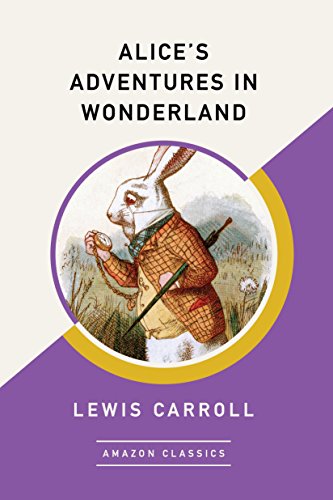
1.Alice’s Adventures in Wonderland by Lewis Carroll (1865)
Even if you’re not a math geek, you’re probably familiar with the algebraist Charles Dodgson — you just know him his much more famous alter-ego, Lewis Carroll. Unlike Dodgson, Carroll wrote stories that defied logic, twisting it into dreamlike, fantastical shapes: a hookah-smoking caterpillar, a flamingo-filled croquet-ground, a perpetually tardy White Rabbit. The result was , which has delighted adults and children alike since it was published over a century and a half ago — and today is recognized as a momentous early foray into the fantasy genre as a whole.