The Time Machine is often credited as the work that sparked the concept of time travel via a — drum roll please — time machine! In this seminal novel that launched H.G. Wells’ career, a time travelling explorer visits a future 800,000 years away. Instead of an encountering an advanced and superior society, he finds that Earth is dying and the races that still inhabit it are at war. In order to return home, he’ll have to explore the tunnels nister Morlocks live — and discover the darker side of human nature.
2. Brave New World by Aldous Huxley (1932)
Hundreds of years in the future, the world is a utopian dream (read: dystopian nightmare) thanks to genetic manipulation, an intelligence-based caste system, heavy medication, and the fact that people now learn in their sleep. What a time to be alive! A classic of the genre, Brave New World is almost always mentioned in the same breath as Orwell’s Nineteen Eighty-Four.
3. Nineteen Eighty-Four by George Orwell (1949)
In this age of Big Data, digital surveillance, fake news and “enemies of the people,” Orwell’s post-war classic has never seemed more relevant. Set in a future Britain where the ruling “Party” has placed restrictions over its citizens’ thoughts and individuality, Nineteen Eighty-Four has had an incredible impact on our modern lexicon. Among the terms coined by Orwell are Big Brother, thought crime, and Room 101.
4. The Martian Chronicles by Ray Bradbury (1950)
While science fiction authors of the Jet Age were busy imagining what it would be like if Martians invaded Earth, Ray Bradbury was working with a more plausible premise: that we’d be the ones invading Mars. More of a loose collection of stories than a novel united by a central narrative, the vignettes in The Martian Chronicles chart the violent conflict between colonizers and natives of the Red Planet.
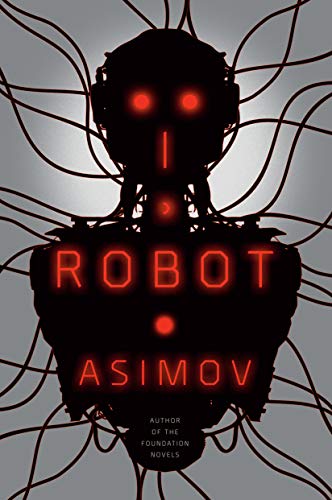
5. I, Robot by Isaac Asimov (1950)
You’ve probably seen the I, Robot film starring Will Smith, but you should still read the novel — and now more than ever. In this single title, Asimov basically defined his generation’s perception of robots: that they should serve, but never surpass or disobey, humans. This “fix-up” novel is comprised of short stories and essays that detail the origin and development of robots — some of which are mad, and others which have political aspirations or just enjoy a good joke — and humanity’s complex relationship with its own creations.